.png)

Back
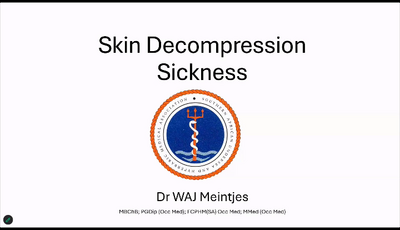
Skin Decompression Sickness
Dr. Jack Meintjies | Clinical
Review of skin decompression sickness and the role of hyperbaric oxygen therapy.
| Topic / Title of the Talk | Skin Decompression Sickness |
| Field of Medicine | Aerospace & Diving Medicine |
| Length of the Talk | 58 Mins |
| CPD Accreditation No. | MDB015/MPDP/070/1795 |
| Category of the Talk | Subject review or overview |
| CPD Type | Clinical |
| Languages (Translations) & Subtitles | Not Translated |
| Speaker | Dr. Jack Meintjies |
Talk Description
The lecture focuses on decompression sickness (DCS), particularly skin manifestations, and the broader physiological and safety implications for divers. Skin decompression sickness typically presents as a mottled rash with associated symptoms such as itching or burning. While often mild and responsive to oxygen therapy, it can sometimes indicate more serious systemic involvement. Accurate diagnosis is essential, as similar skin conditions may mimic DCS and affect management decisions.
The role of underlying anatomical factors, especially abnormal cardiac shunts, is highlighted as a key contributor to more severe forms of DCS. These shunts can allow gas bubbles to bypass the lungs and enter the arterial circulation, leading to embolism and affecting organs such as the brain, spinal cord, and inner ear. This can result in neurological, visual, and vestibular symptoms.
Management ranges from oxygen therapy for mild cases to recompression treatment for more severe presentations. The lecture also emphasizes that treatment may need to extend beyond hyperbaric oxygen therapy to address inflammation and vascular injury.
Finally, the importance of prevention is stressed, including safe diving practices, awareness of risk factors, and proper equipment use. Education, careful screening, and individualized management are key to reducing complications and ensuring diver safety.
The role of underlying anatomical factors, especially abnormal cardiac shunts, is highlighted as a key contributor to more severe forms of DCS. These shunts can allow gas bubbles to bypass the lungs and enter the arterial circulation, leading to embolism and affecting organs such as the brain, spinal cord, and inner ear. This can result in neurological, visual, and vestibular symptoms.
Management ranges from oxygen therapy for mild cases to recompression treatment for more severe presentations. The lecture also emphasizes that treatment may need to extend beyond hyperbaric oxygen therapy to address inflammation and vascular injury.
Finally, the importance of prevention is stressed, including safe diving practices, awareness of risk factors, and proper equipment use. Education, careful screening, and individualized management are key to reducing complications and ensuring diver safety.
Related Talkz


.jpg)